NORTHERN CALIFORNIA
Klamath
Broad runs, long seams, and room to settle into a rhythm. Break big water into short, deliberate swings instead of trying to cover the whole river.
LOOK FOR Walking-speed seams
NORTHERN CALIFORNIA / SOUTHERN OREGON
Two hands on the cork. A fly moving through good water. A field guide to the rivers, rhythms, and small details of swinging for steelhead.
Find your water ↓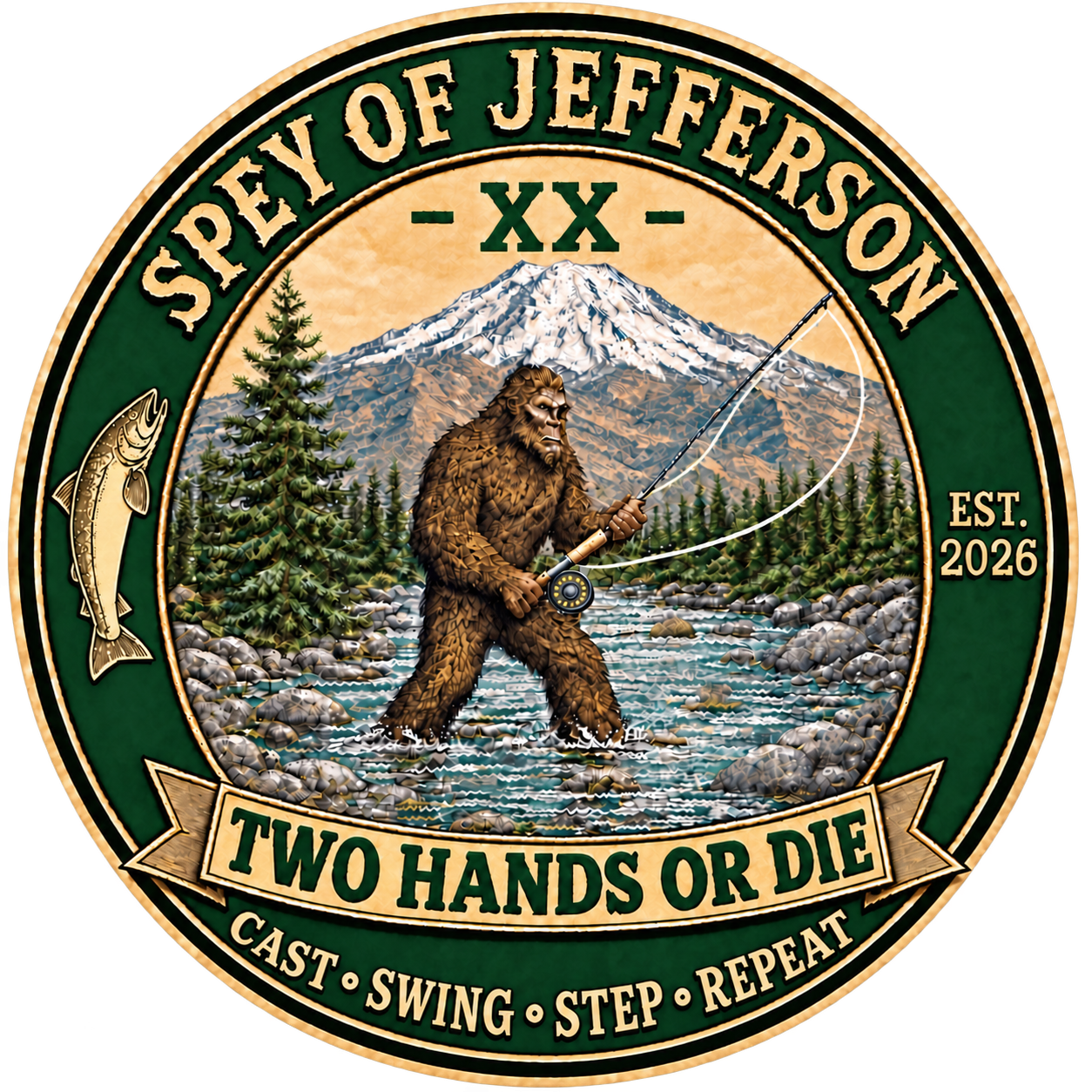
01 / KNOW YOUR WATER
Seven rivers. A lifetime of learning.
Start with the character of the water. Look for a manageable current, a clean swing, and a safe place to stand. These are river introductions, not live fishing reports or access directions.
NORTHERN CALIFORNIA
Broad runs, long seams, and room to settle into a rhythm. Break big water into short, deliberate swings instead of trying to cover the whole river.
NORTHERN CALIFORNIA
A more intimate classroom. Work the softer edges, pockets, and tailouts; clean line control often matters more than another ten feet of distance.
NORTHERN CALIFORNIA
Clear water, bedrock, and powerful currents. Study the edges before wading and keep your profile low when the river is clear.
NORTHERN CALIFORNIA
A rain-driven system where flow and clarity shape the day. Pick a manageable reach and watch the trend, not just a single gauge reading.
SOUTHERN OREGON
A big river with distinct personalities from reach to reach. Match your approach to the stretch; broad riffles and even runs reward methodical coverage.
SOUTHERN OREGON
Storied fly water with boulders, ledges, and demanding wading. Read each pocket carefully and confirm the rules for the exact reach.
SOUTHERN OREGON
Coastal steelhead water shaped by rain. Scout for a controlled swing along gravel bars and softer margins; high water can erase safe footing.
02 / BUILD THE CAST
Smooth beats strong.
A spey cast uses a water anchor and a D-loop to load the rod with less backcast space. The goal is a straight, controlled delivery—not maximum effort.
Place the fly and leader on the water to your safe side. Too much line stuck to the surface kills the cast; too little anchor lets it slip.
Align the anchor, rod path, and target. Check behind you for brush and people before forming the loop.
Build speed smoothly and make a crisp stop. Let the lower hand contribute instead of punching with the top hand.
CASTING NOTES / OPEN A LESSON
A sustained-anchor cast worth learning early. Reposition the line, sweep smoothly into the D-loop, and deliver. Keep the fly anchored until the forward stroke; avoid a rushed, splashy sweep.
These reposition the line before a sustained-anchor delivery. Make a controlled setup, let the fly land in a safe position, and sweep without dragging the anchor across your body.
A touch-and-go cast with a brief anchor. Lift, turn into the D-loop, and deliver as the leader touches down. Timing is less forgiving; practice with yarn before adding a hook.
Wind direction decides which shoulder is safe: keep the fly and D-loop on the downwind side, away from your body. Change hands or use a suitable off-shoulder cast. If you cannot keep the fly safely away, stop and reposition.
Practice with yarn, eye protection, and plenty of space. In-person instruction is especially useful for anchor placement and wind decisions.
03 / FISH THE FLY
Presentation comes first.Think in terms of angle, depth, and speed. Change one thing at a time so you can feel what the fly is doing.
Cover the near seam before wading through it. A cast roughly 45° downstream is a starting point, then adjust to the current.
An early upstream mend can help the fly settle and slow the swing. A downstream mend can speed it up. Watch how different currents pull the line.
Keep enough tension to feel the fly without dragging it. Let it finish below you; pause at the hang-down before retrieving.
Take a small, safe step downstream and repeat. Ask before entering an occupied run and follow the rotation already in use.
Resist the instant trout strike. Let steady tension develop, then set firmly with the rod low. Avoid clamping down on a hard-running fish.
04 / KEEP IT SIMPLE
A balanced outfit. A small fly box.The head, leader or tip, and fly have to work together. Use the rod maker’s grain window and the line maker’s tip guidance; a rod’s printed weight is only part of the story.
LIGHT & PRECISE
A longer front taper favors clean turnover with smaller, lighter flies. Pair it with a suitable tapered leader or compatible light sinking leader.
For traditional wets and delicate presentations.
COMPACT & CAPABLE
A compact head carries compatible sink tips and heavier flies. Match tip length and mass to the head and rod; more weight is not automatically better.
For depth, larger flies, and restricted casting space.
THE CONFIDENCE BOX
Carry a few traditional wets such as a Silver Hilton or Undertaker, sparse dark and bright patterns, and a few larger profiles for stained water.
Choose size, silhouette, and weight before color.
SPEY OF JEFFERSON / STICKER SHOP
CAST. SWING. STEP. REPEAT.
4-inch round vinyl sticker.
$9 each
Shipping included · U.S. addresses only
Pay $9 with PayPalUse PayPal.Me to pay, then email your shipping address to Ted.
05 / BEFORE YOU GO
Check the exact river reach, current regulations, emergency closures, flow trend, temperature, and lawful access. Seasonal patterns never guarantee an open fishery.
Give other anglers room. Avoid spawning redds. Wet your hands, keep released fish in the water, and minimize handling. Clean, drain, and dry your gear between watersheds. Wear a wading belt and use a staff where footing is uncertain.